
How to Import Spices from India — Complete Buyer's Guide 2025
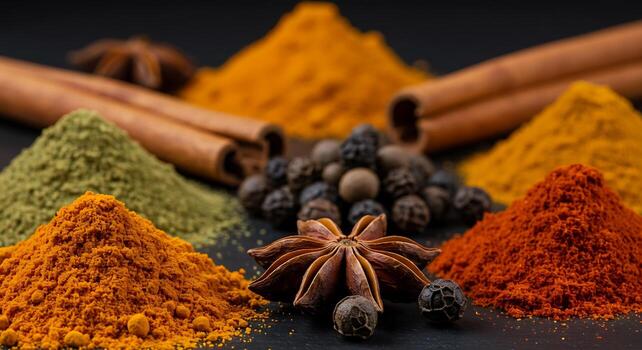
1. Why India is the World's Spice Capital
India produces approximately 75% of the world's spice varieties and accounts for nearly 40% of global spice exports by volume. The states of Gujarat, Rajasthan, Andhra Pradesh, Kerala, and Madhya Pradesh are the primary spice-growing regions, each specialising in different varieties suited to their climate and soil.
Key advantages of importing spices from India:
- Unmatched variety — India offers everything from cumin and coriander to turmeric, fennel, fenugreek, mustard, and red chilli, all from a single country.
- Superior aroma and quality — Indian spices are renowned globally for their high essential oil content, intense colour, and authentic flavour profile.
- Competitive pricing — Direct sourcing from India eliminates intermediary markups common in other spice-trading countries.
- Regulatory compliance — The Spices Board of India (under the Ministry of Commerce) strictly regulates quality and certifies exporters for global markets.
- Large-scale supply — India can fulfil bulk orders of any size, from 1 MT samples to full container loads of 20+ MT.
📊 India Spice Export Quick Facts (2024–25)
- Total spice exports: approx. USD 4 billion annually
- Top exported spices: Chilli, Cumin, Turmeric, Coriander, Pepper, Fennel
- Top export destinations: USA, China, Vietnam, Bangladesh, UAE, UK
- Key export ports: Mundra (Gujarat), JNPT (Mumbai), Chennai
2. Main Spices Available for Export from India
Here are the most commonly exported Indian spices with their key specifications:
Cumin Seeds (Jeera)
Gujarat and Rajasthan produce over 80% of India's cumin. Indian cumin is known for its strong aroma and high volatile oil content (2.5–4%). It is available as whole seeds or ground powder.
| Parameter | Specification |
|---|---|
| Moisture | Max 10% |
| Volatile oil | Min 2.5% |
| Admixture | Max 1% |
| Packaging | 25 kg / 50 kg PP bags |
| Origin | Gujarat, Rajasthan |
Coriander Seeds (Dhaniya)
India is the world's largest coriander producer. Available in whole seed and split (dhana dal) form. Rajasthan's Eagle variety is the most sought-after for export.
| Parameter | Specification |
|---|---|
| Moisture | Max 10% |
| Volatile oil | Min 0.3% |
| Admixture | Max 1.5% |
| Varieties | Eagle (bold), Scooter (small) |
Fennel Seeds (Saunf)
Gujarat produces the finest fennel seeds in the world. Indian fennel is characterised by its sweet aroma, bright green colour, and high volatile oil content. Popular in Middle Eastern, European, and Asian markets.
Turmeric (Haldi)
Andhra Pradesh and Telangana are the main producers. Indian turmeric is graded by curcumin content (the active compound responsible for colour and health benefits). Minimum curcumin of 3% is the export standard.
Red Chilli
Andhra Pradesh produces the most widely exported varieties — Teja (very hot, deep red), 334 (medium heat), and Byadgi (dark colour, mild heat used for colour extraction). Available whole, stemless, or as powder.
3. Quality Standards and Certifications
When importing spices from India, ensure your supplier meets these standards:
- Spices Board of India certification — The Spices Board certifies exporters and sets minimum quality standards for all exported spices.
- FSSAI licence — Food Safety and Standards Authority of India licence is mandatory for all food product exporters.
- APEDA registration — Required for agricultural product exporters.
- ISO 22000 / HACCP — International food safety management certifications, particularly important for EU and US buyers.
- EU MRL compliance — The European Union has strict Maximum Residue Limits (MRL) for pesticides. Always request pesticide residue test reports for EU-bound shipments.
- Non-irradiated certificate — Some markets (especially organic buyers) require confirmation that spices have not been irradiated.
💡 Buyer Tip — EU Pesticide Residue Alert
The EU has flagged Indian spices (especially cumin and coriander) for pesticide residue violations in the past. Always ask your supplier for a current pesticide residue test report from an accredited lab (NABL-approved) before importing to Europe. Reputable exporters provide this as standard documentation.
4. Packaging Options for Spice Export
- 25 kg / 50 kg PP woven bags — Standard bulk packaging. Most cost-effective for large orders.
- 10 kg paper kraft bags — Preferred by organic and premium buyers. Better presentation.
- Vacuum-sealed bags — Recommended for powders and high-value spices. Preserves aroma and prevents moisture ingress.
- Retail consumer packs — 100g, 200g, 500g, 1kg pouches with your private label printing. MOQ typically 500 kg per SKU.
- Custom packaging — Most exporters accommodate buyer-specific packaging, labelling, and branding for established buyers.
5. Approximate Export Prices (2025)
| Spice | Approx. FOB Price (per MT) |
|---|---|
| Cumin Seeds (whole) | USD 2,200 – 2,800 |
| Coriander Seeds (whole) | USD 800 – 1,100 |
| Fennel Seeds | USD 1,200 – 1,600 |
| Turmeric (finger) | USD 1,100 – 1,500 |
| Red Chilli (whole, Teja) | USD 1,400 – 1,900 |
| Sesame Seeds (white, hulled) | USD 1,500 – 1,900 |
| Fenugreek Seeds | USD 700 – 950 |
Prices vary with season, grade, and market conditions. Request a current quote from your supplier for accurate pricing.
6. Export Documents Required
- Commercial Invoice and Packing List
- Bill of Lading / Airway Bill
- Certificate of Origin (from Spices Board or Chamber of Commerce)
- Spices Board Quality Certificate
- Phytosanitary Certificate (issued by Plant Quarantine Authority)
- Pesticide Residue Test Report (mandatory for EU)
- Fumigation Certificate
- Non-GMO and Organic Certificate (if applicable)
7. Step-by-Step: How to Place Your First Order
- Identify your spice requirement — Specify the variety, grade, form (whole/powder), quantity, and destination.
- Request samples — Always test samples before bulk ordering. Check aroma, colour, moisture, and volatile oil content.
- Verify supplier credentials — Check Spices Board registration, APEDA certificate, and FSSAI licence.
- Request test reports — Ask for recent pesticide residue and moisture reports from an NABL-accredited lab.
- Get quotations — Compare FOB or CIF quotes from 2–3 suppliers.
- Agree on payment terms — Standard is 30% advance + 70% against Bill of Lading (TT or LC at sight).
- Sign a Proforma Invoice — Clearly state product specs, quantity, packaging, and shipment terms.
- Arrange pre-shipment inspection — For large orders, hire SGS or Bureau Veritas to inspect at source.
Looking for a Trusted Spice Exporter from India?
Petolix Exports supplies premium cumin seeds, coriander seeds, fennel seeds, sesame seeds and more from Rajkot, Gujarat. All products are machine cleaned, sortex graded and available with full export documentation.
📩 Request a Free Quote