How to Import Peanuts from India — Complete Buyer's Guide 2025
1. Why Import Peanuts from India?
India consistently ranks among the top three peanut-producing countries in the world alongside China and the USA. The states of Gujarat, Andhra Pradesh, and Rajasthan produce the majority of India's groundnut output, with Gujarat alone accounting for nearly 40% of national production.
Here is why international buyers prefer Indian peanuts:
- Competitive pricing — Indian peanuts are priced significantly lower than Chinese or American alternatives, offering strong value for importers
- Excellent quality — Bold and Java varieties from Gujarat are globally recognised for their high oil content, uniform size, and clean taste
- Year-round availability — India has two harvest seasons (Kharif and Rabi), ensuring consistent supply throughout the year
- Strong export infrastructure — Ports at Mundra, Kandla, and JNPT handle large-volume groundnut shipments efficiently
- APEDA and FSSAI regulated — Indian exporters follow strict quality and phytosanitary standards for international markets
📊 Quick Facts — India Peanut Exports
- Annual production: ~6–7 million metric tonnes
- Top export destinations: Indonesia, Vietnam, Philippines, Middle East, Europe
- Main varieties exported: Bold (Runner), Java (Spanish), Blanched
- Key export season: October to March (post-Kharif harvest)
2. Peanut Grades and Varieties — What to Order
Understanding peanut grades is essential before placing an order. Indian exporters classify peanuts primarily by variety, size count, and processing type.
By Variety
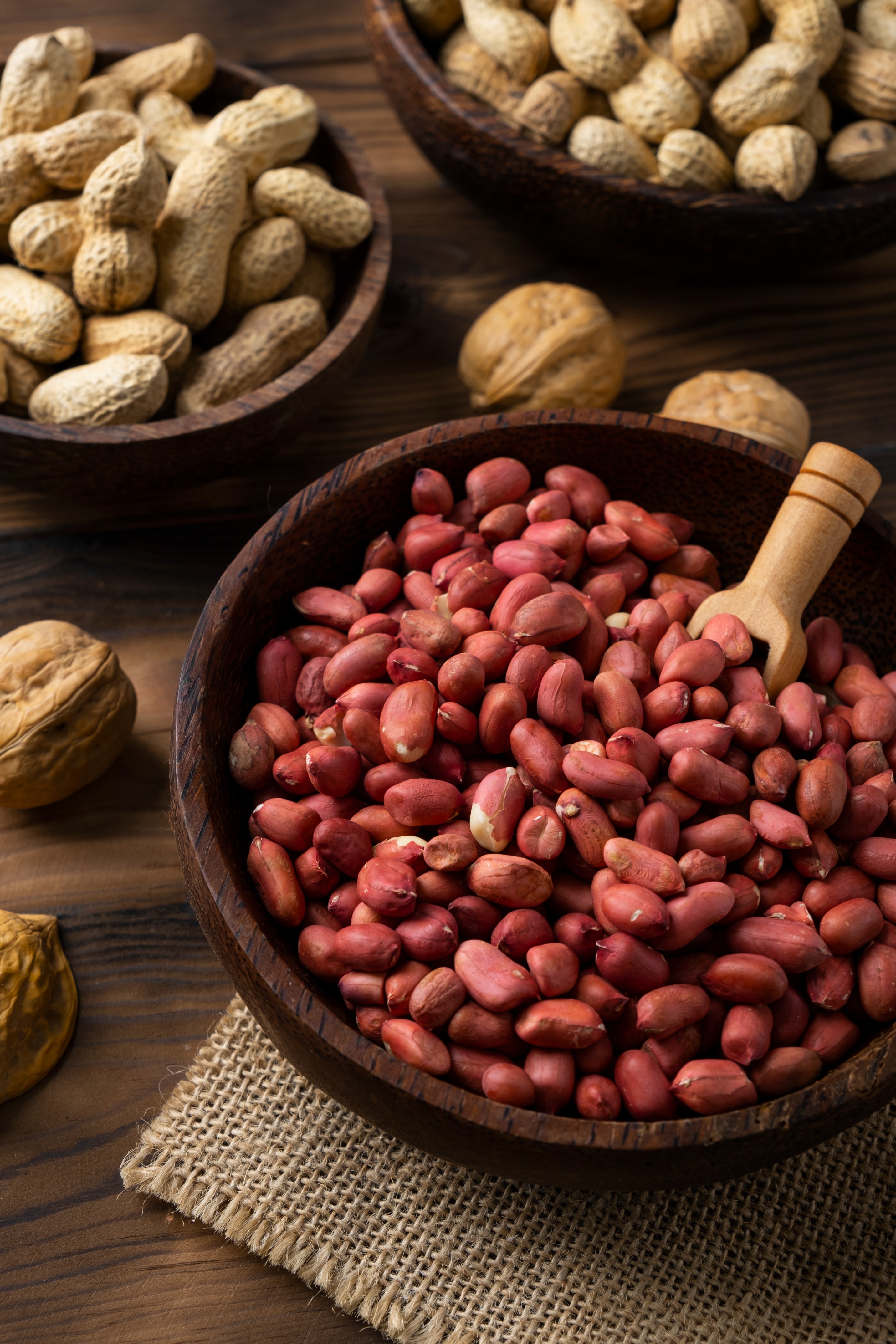
- Bold (Runner) Peanuts — Large, oval-shaped kernels. Most popular for snacking, roasting, and peanut butter manufacturing. Size counts range from 38/42 to 60/70 per ounce.
- Java (Spanish) Peanuts — Smaller, rounder kernels with higher oil content. Preferred for oil extraction and confectionery use. Size counts 70/80 and above.
- Blanched Peanuts — Bold or Java peanuts with the red skin removed. Used in food processing, bakeries, and candy manufacturing.
Standard Export Specifications
| Parameter | Bold Peanuts | Java Peanuts | Blanched |
|---|---|---|---|
| Moisture | Max 7–8% | Max 7–8% | Max 6% |
| Admixture | Max 0.5% | Max 0.5% | Max 0.1% |
| Aflatoxin (B1+B2+G1+G2) | ≤ 4 ppb (EU) / ≤ 20 ppb (general) | ≤ 4 ppb (EU) | ≤ 4 ppb |
| Shelling out-turn | 68–72% | 65–68% | N/A |
| Common size counts | 38/42, 40/50, 50/60, 60/70 | 70/80, 80/90 | 38/42, 40/50 |
💡 Buyer Tip — Aflatoxin Testing
Always ask your supplier for a third-party aflatoxin test report before shipment, especially if you are importing to the European Union, which has the strictest limit of 4 ppb for B1 and 10 ppb total. Reputable Indian exporters will provide this as standard.
3. Packaging Options
Indian peanut exporters offer several packaging options depending on your end use and destination market requirements:
- 50 kg PP (polypropylene) woven bags — Most common for bulk shipments. Cost-effective and widely used for industrial buyers.
- 25 kg PP bags — Popular for medium-volume buyers and retail distributors.
- Vacuum-sealed bags — Recommended for blanched peanuts and markets with high humidity. Extends shelf life significantly.
- Jute bags — Preferred by buyers in Europe who prioritise eco-friendly packaging. Available in 50 kg sizes.
- Consumer retail packs — 500g, 1kg pouches with your private label. Minimum order quantities apply.
Most exporters can accommodate custom labelling and private label packaging for orders above a minimum quantity (typically 1 FCL — one full container load of approximately 24–26 MT).
4. Shipping Terms — FOB, CIF, and DDP Explained
When buying peanuts from India, you will negotiate the price based on one of three main shipping terms (Incoterms). Understanding these protects you from unexpected costs.
| Term | What It Means | Best For |
|---|---|---|
| FOB (Free on Board) |
Seller delivers goods to the Indian port and loads them onto the ship. You (buyer) pay for ocean freight, insurance, and import duties. | Experienced importers with their own freight forwarder |
| CIF (Cost, Insurance & Freight) |
Seller pays for shipping and insurance to your destination port. You handle customs clearance and inland transport. | Mid-level importers who want shipping handled by the exporter |
| DDP (Delivered Duty Paid) |
Seller handles everything — shipping, insurance, customs, and delivery to your warehouse. You just receive the goods. | First-time buyers or those who prefer a hassle-free experience |
💡 Buyer Tip — Which Term to Choose?
For your first order, CIF is usually the safest option. It gives you visibility on the total landed cost while the exporter handles freight logistics from India. Once you have a trusted freight forwarder, switch to FOB for better price control.
5. Minimum Order Quantity (MOQ)
Typical minimum order quantities for peanut exports from India are:
- 1 FCL (Full Container Load) — approximately 24–26 metric tonnes in a 20-foot container. This is the standard MOQ for most exporters and gives you the best per-kg price.
- LCL (Less than Container Load) — some exporters accept smaller orders of 1–5 MT, though the per-kg price will be higher due to consolidation costs.
- Sample orders — Most reputable exporters provide 2–5 kg samples for quality testing before your first bulk order. Typically charged at cost plus courier fees.
6. How to Find a Reliable Peanut Exporter in India
With hundreds of exporters in Gujarat alone, choosing the right supplier is critical. Here is what to look for:
Essential Checks
- IEC (Import Export Code) — Every legal exporter in India must have an IEC number issued by DGFT. Always ask for it and verify at dgft.gov.in.
- APEDA registration — The Agricultural and Processed Food Products Export Development Authority registers and regulates Indian agri exporters. Ask for the APEDA certificate.
- FSSAI licence — Required for food product exporters. Ensures the exporter follows food safety standards.
- Third-party lab reports — Ask for recent aflatoxin, pesticide residue, and moisture test reports from an accredited laboratory.
- Export references — Request references from previous international buyers, preferably in your country or region.
Red Flags to Avoid
- No IEC or APEDA registration
- Unwilling to provide lab test reports
- Asking for 100% advance payment with no escrow option
- No physical address or factory verification possible
- Prices far below market rate (often a sign of quality compromise)
📋 Documents You Should Receive with Every Shipment
- Commercial Invoice
- Packing List
- Bill of Lading (or Airway Bill)
- Certificate of Origin (issued by APEDA or Chamber of Commerce)
- Phytosanitary Certificate
- Quality / Lab Test Certificate (Aflatoxin report)
- Fumigation Certificate (if required by your country)
7. Current Pricing Guide (2025)
Peanut export prices from India fluctuate based on harvest season, demand, and global commodity markets. As of 2025, approximate FOB prices from Indian ports are:
| Product | Approx. FOB Price (per MT) |
|---|---|
| Bold Peanuts (40/50 count, in shell) | USD 700 – 850 |
| Bold Peanuts (40/50 count, shelled) | USD 950 – 1,150 |
| Java Peanuts (70/80 count, shelled) | USD 900 – 1,100 |
| Blanched Peanuts | USD 1,100 – 1,350 |
| Peanut Oil (crude) | USD 1,200 – 1,500 |
Note: Prices vary based on quantity, grade, packaging, and current market conditions. Always request a current quotation from your supplier for accurate pricing.
8. How to Start Your First Order — Step by Step
- Define your requirement — Decide on variety (Bold or Java), size count, quantity, packaging type, and destination port.
- Request samples — Contact 2–3 exporters and request samples before committing to a bulk order.
- Get quotations — Request FOB or CIF quotes from each supplier. Compare price, lead time, and certifications.
- Verify the exporter — Check IEC, APEDA registration, and ask for references.
- Negotiate payment terms — Common terms are 30% advance + 70% against documents (LC or TT).
- Place the order — Sign a Proforma Invoice or Sales Contract clearly stating product specs, quantity, price, packaging, and shipping terms.
- Arrange quality inspection — For large first orders, consider hiring a third-party inspection agency (SGS, Bureau Veritas) at the loading port.
- Receive and clear shipment — Your freight forwarder or customs broker handles import clearance on arrival.
Ready to Import Peanuts from India?
Petolix Exports is a trusted peanut exporter from Rajkot, Gujarat, India. We supply Bold, Java, and Blanched peanuts to buyers across the Middle East, Asia, Europe, and Africa with full documentation, competitive pricing, and reliable shipping.
📩 Get a Free Quote Today